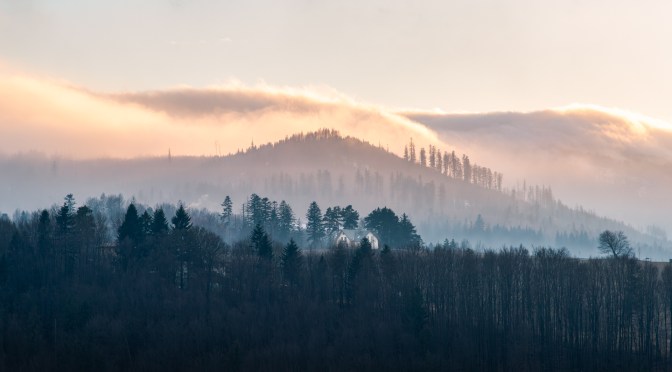
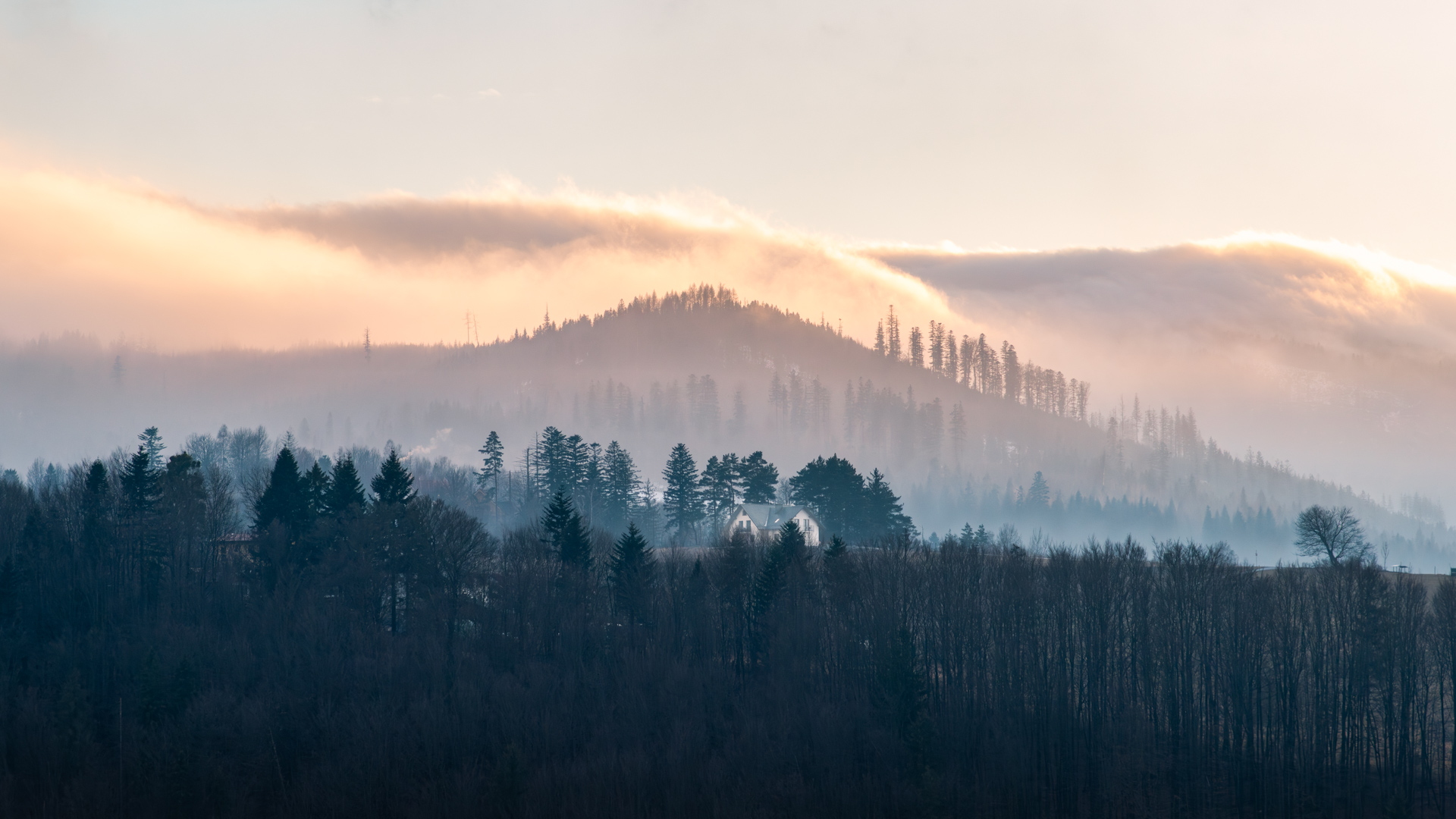
Winter layers in the hills above Wisła — mist, soft light, and a small hut holding the scene together
Winter mornings in the mountains often feel quiet enough that every little detail stands out — the crunch of snow under your boots, the faint glow building behind the ridge, the way the cold air seems to soften everything in the distance. This frame from Wisła, the hometown of ski-jumping legend Adam Małysz, caught my attention because the landscape naturally arranged itself into layers. All I had to do was respond to what the scene was already offering: shifting tones, mist drifting between the trees, and a small hut sitting calmly in the middle of it all.
Composition
The image rests on three intertwined ingredients — all simple, yet incredibly effective in winter photography:
- Atmospheric depth that increases with distance, giving you that watercolor-like fade as each layer grows lighter and softer.
- A quiet anchor point — the hut placed just off-center, emerging from the mist without dominating the frame.
- Warm–cool tension, where the chilly blue foreground gently meets the warm, pastel line of sunrise light brushing over the ridge.
If you ever feel a winter scene looks flat, look for these contrasts. They do the heavy lifting for you.
Camera Raw / Lightroom Development
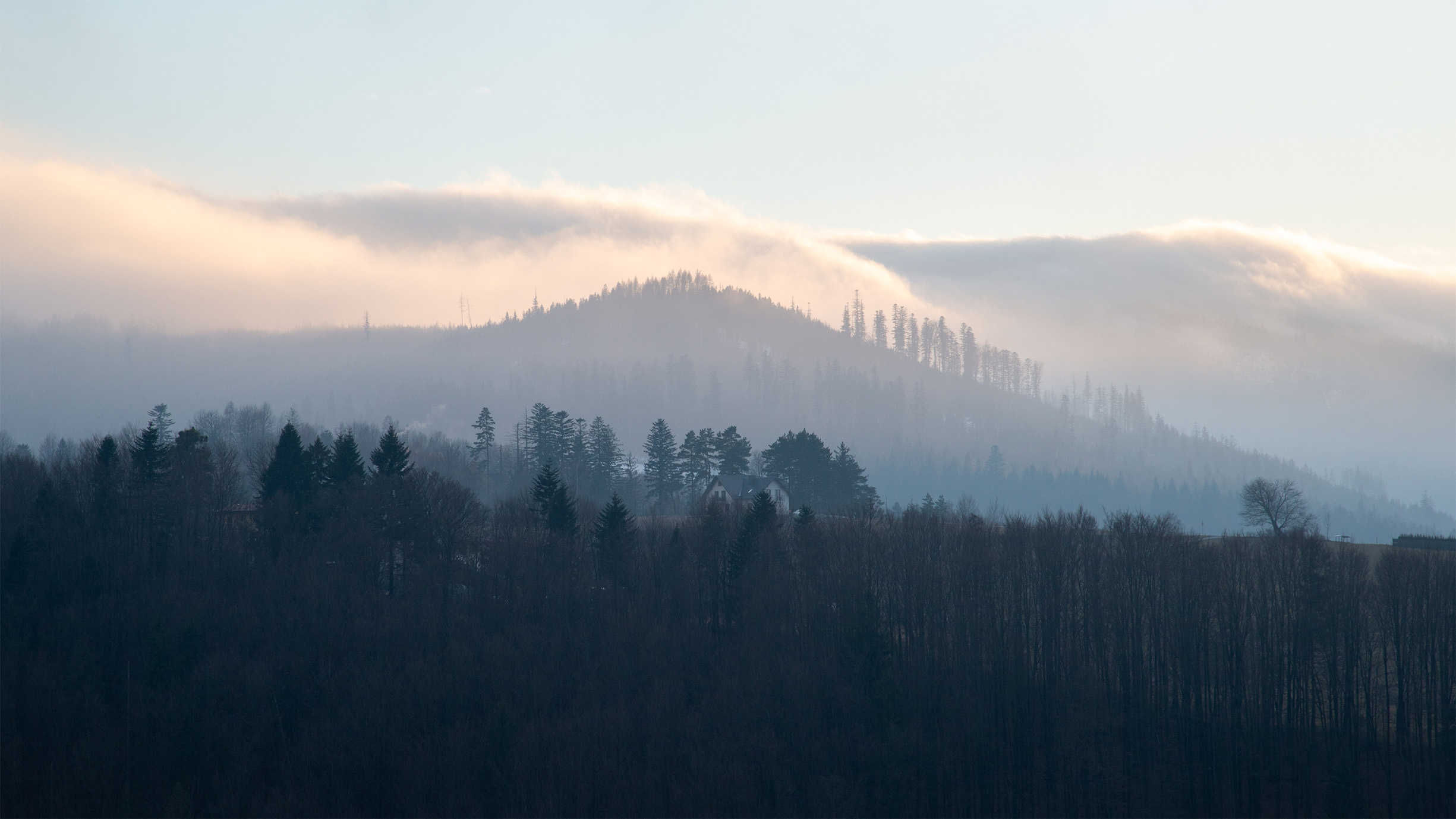
In the first stage, the goal was to keep the winter calm intact while guiding the eye through the layers. Think of this part as shaping the atmosphere rather than “fixing” anything.
- I cooled the White Balance just a touch and recovered Highlights to bring texture back into the fog.
- A soft lift to Shadows — specifically in the mid-tone layer — helped the hut breathe without washing out the darker trees.
- Through Color Grading, I leaned into the natural palette: cooler shadows for a winter base, warmer highlights to maintain that sunrise glow.
- Using Local Adjustments, I brightened the hut ever so slightly and reduced contrast inside the fog pockets, letting them melt together more gently.
Tip: When editing fog, less is always more. Lift contrast too much and the mystery disappears; push clarity and the atmosphere collapses.
Photoshop Finishing
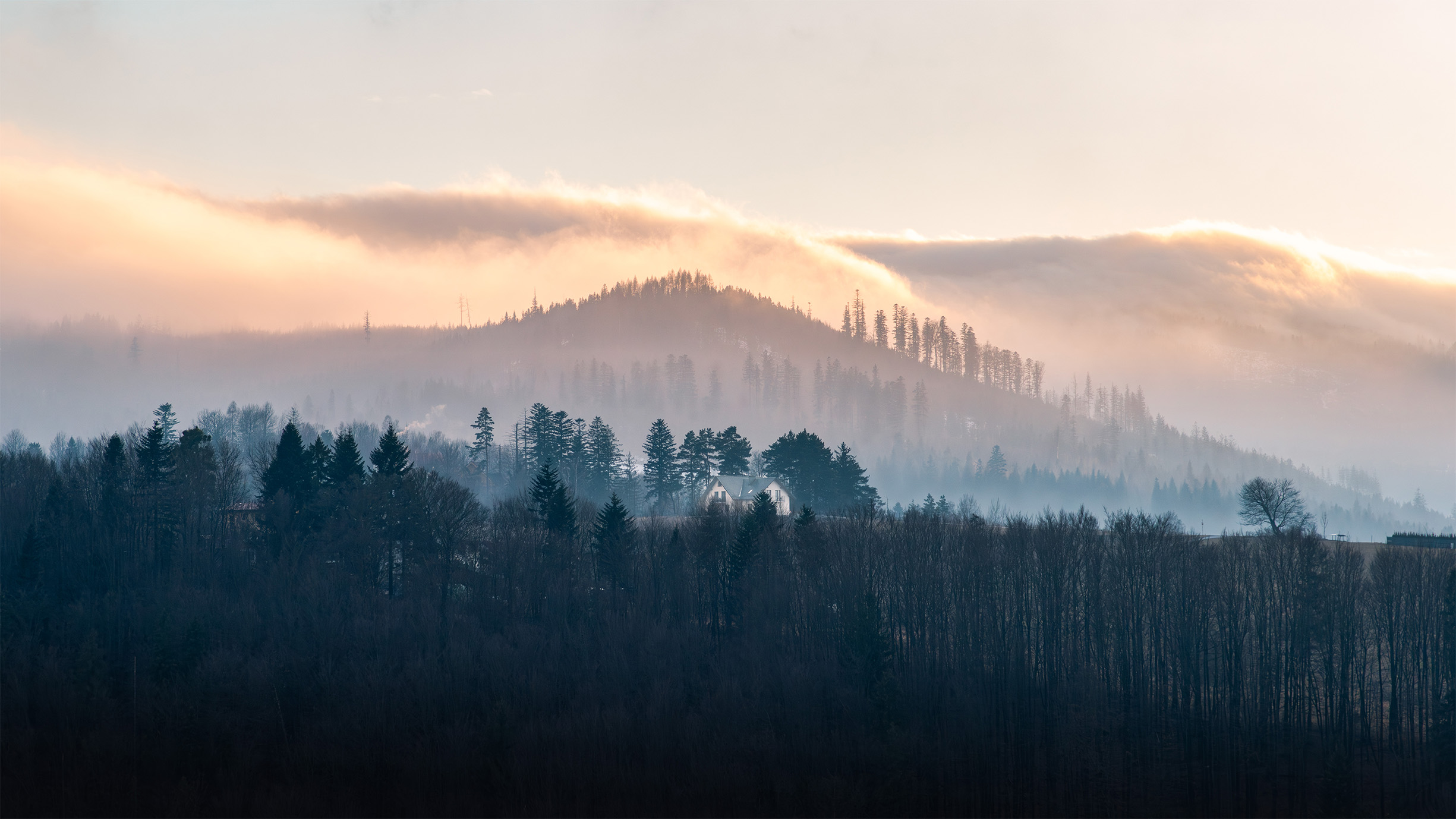
Photoshop was all about nuance — strengthening the separation between layers without making the image look “edited.”
I created a few soft, luminosity-based layers so each tonal region could be shaped gently rather than forced:
- Using Curves, I lifted exposure in the mist to enhance the natural glow and added a slight softness, almost like the fog is breathing.
- A subtle Dodge pass on the hut helped it read clearly at a distance without looking artificially bright.
- I added a warm brushstroke along the illuminated cloud edge, balanced by a cool undertone in the lower half — a quiet color dialogue that keeps the mood wintery.
- Finally, I hand-painted a soft vignette to keep attention drifting back toward the hut and the warm ridge line.
Small trick: A hand-painted vignette blends better than a preset one. Work with a big, feathered brush at 5–10% flow — it feels organic instead of obvious.
Final Thoughts
This was a simple scene, but winter rewards subtlety. The beauty often lies in how softly the land is layered, how delicately the light touches the fog, and how a tiny subject can hold its place in the middle of all that calm. With just a few thoughtful adjustments — both in the field and in post — those quiet moments gain depth without losing their authenticity.
If you shoot winter landscapes, try letting the atmosphere lead. Build your edit around the layers nature already gives you, and you’ll find the mood takes care of itself.
If you enjoy these short breakdowns, check back for more Ride Photo Lab posts where I share practical workflows from the field to the final edit.
Discover more from Shutter and Saddle
Subscribe to get the latest posts sent to your email.
 Shutter and Saddle
One thought on “Winter Layers: Composition & Post-Processing Breakdown”