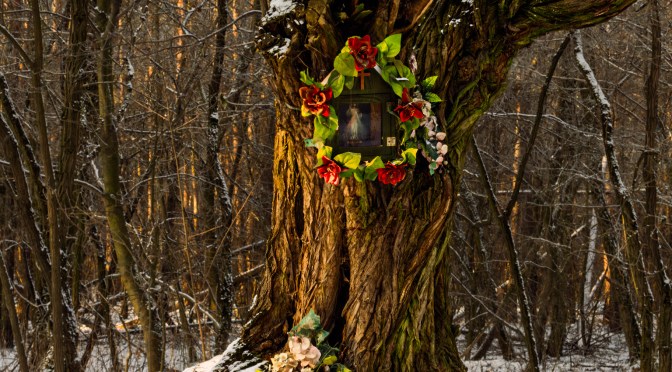
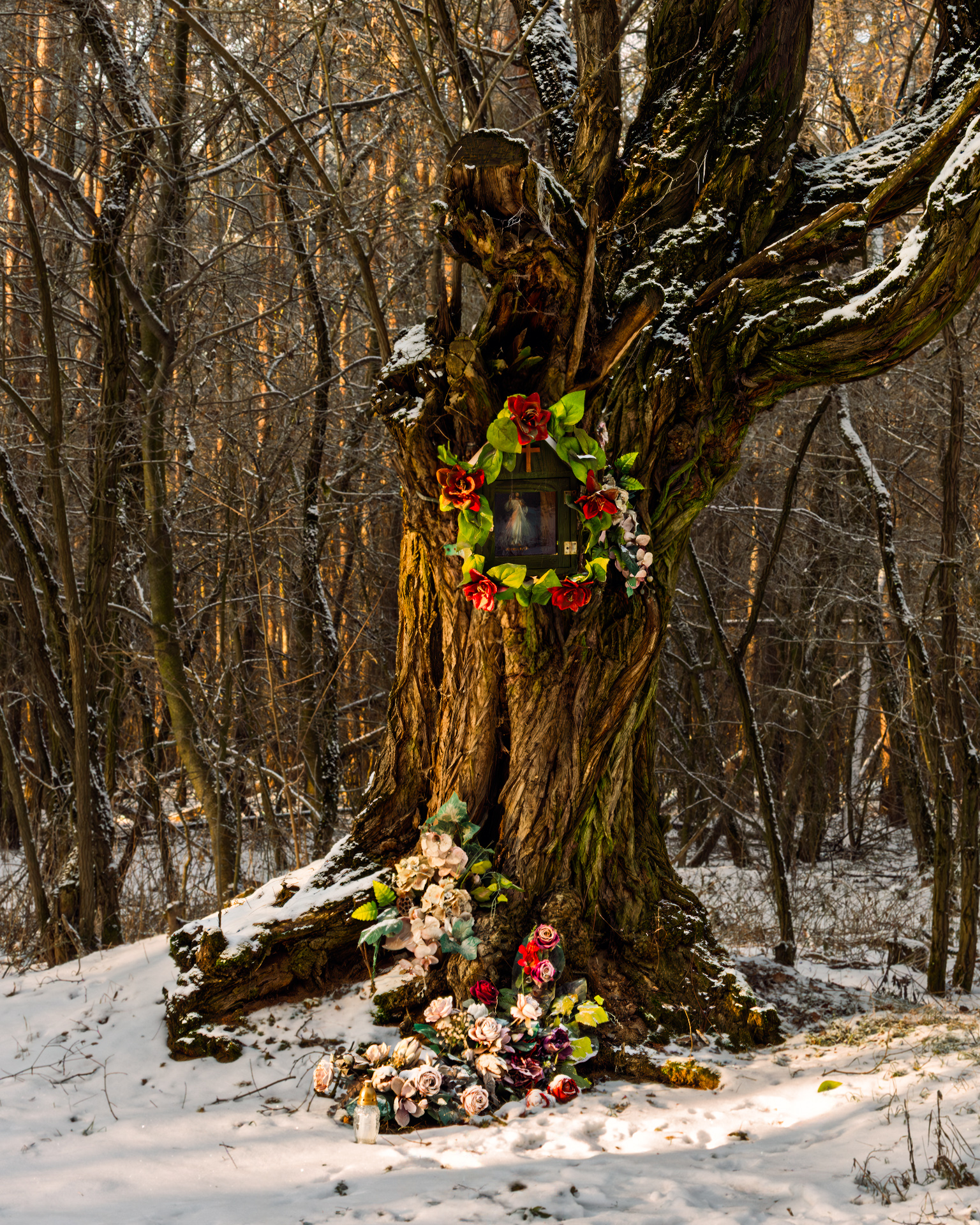
A winter roadside shrine hidden among old trees — quiet, cared for, and shaped by the season
In summer, roadside shrines in Poland often announce themselves — bright flowers, ribbons catching the light, colours that draw the eye. You notice them almost by accident while moving through the landscape.
In winter, it’s different.
This one — hidden among old trees, far from villages and main roads — doesn’t call for attention at all. Snow softens the forest floor, the undergrowth retreats, and the light grows quiet. The shrine becomes part of the landscape, embedded in bark and time.
Roadside shrines are everywhere in Poland, yet no two are alike. Some stand at crossroads, others by fields or village edges. A few — like this one — are built directly into trees that have outlived generations. They are not official monuments. They exist because someone decided they should — and because someone keeps returning.
Even here, in deep winter, that care is clear. Flowers are cleaned and rearranged. A candle rests at the base of the trunk. Snow is pressed down by boots that didn’t stop just to take a photograph.
These shrines change with the seasons. Spring brings fresh greens. Summer fills them with colour and light, especially around church holidays. Autumn quiets everything down.
Winter strips it to essentials.
As a cyclist, I often come across places like this when I’m least prepared to stop. There’s no plan — just a bend in the road, a gap in the trees, and the sense that people have cared about this place long before you arrived, and will care for it long after you leave.
Photographing a winter roadside shrine is less about colour and more about restraint. The forest is dense, the light low. Nothing wants to stand out — and that’s what makes the small details matter. A red flower against dark bark. A green leaf in January. A soft highlight on snow.
I photographed this same shrine once before, in summer, when the forest felt open and alive. Seen together, the two moments feel less like separate images and more like chapters of the same story.
For travellers and cyclists, roadside shrines are more than cultural markers. They are resting points — places where speed drops and the ride turns inward. You don’t need to be religious to feel their meaning.
In winter, especially, they feel like quiet agreements between people and place.
If you pass a roadside shrine on your next ride or walk, take a moment to stop. Notice the details, the season, the signs of care. These small pauses often say more about a place than any landmark on a map.
Discover more from Shutter and Saddle
Subscribe to get the latest posts sent to your email.
 Shutter and Saddle
Did you note who was the object of the devotion of this shrine?
LikeLiked by 1 person
Yes, it’s a shrine to Jezus Miłosierny, which translates to ‘the Divine Mercy of Jesus Christ.’ This devotion is central here in Poland, often associated with the image and message revealed to St. Faustina Kowalska in the 1930s.
LikeLiked by 1 person