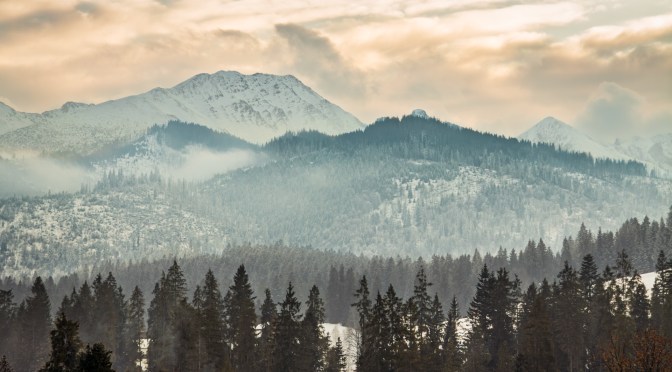
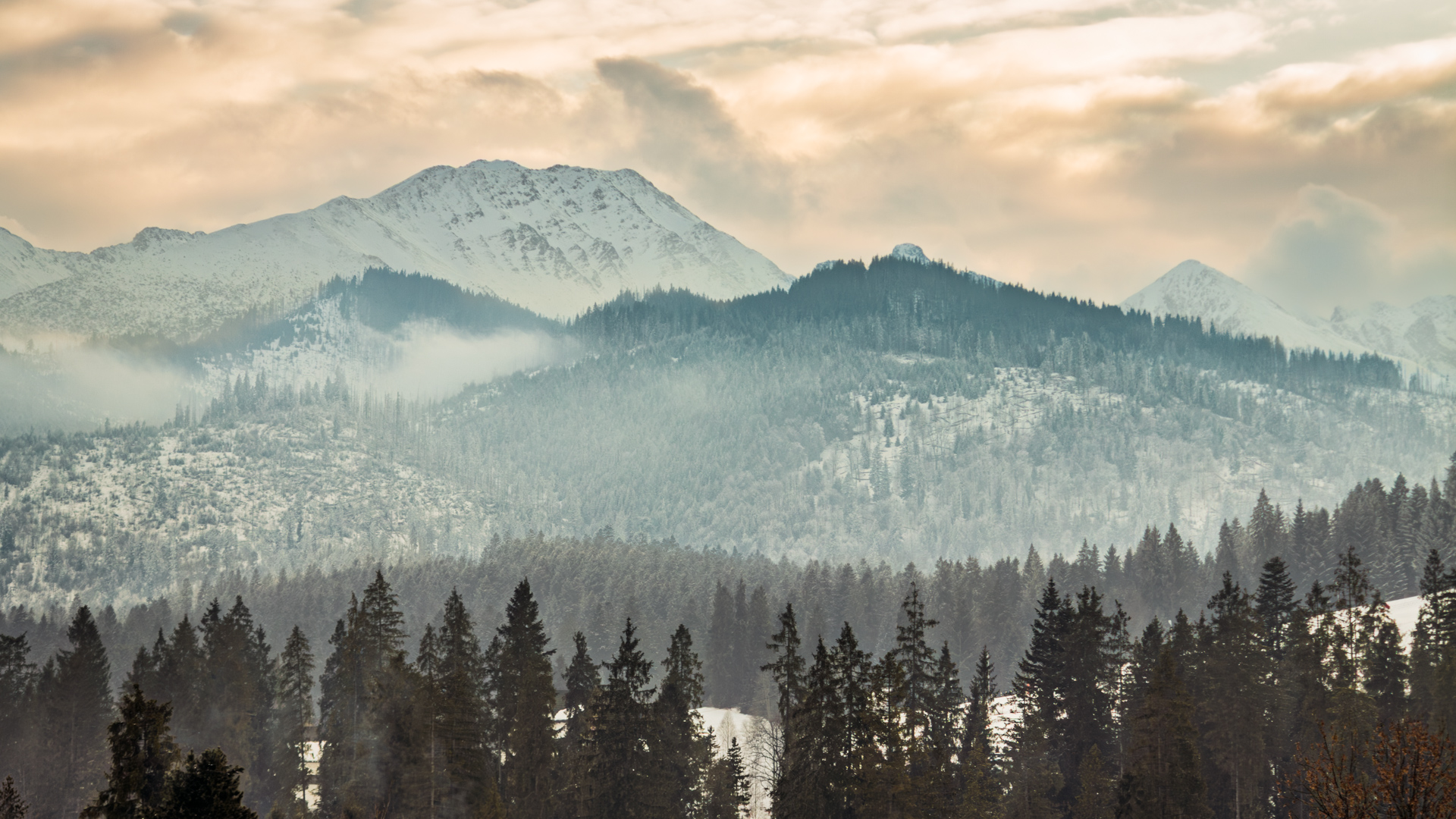
That moment when the highest peaks reveal themselves through winter fog — the Polish Tatras showing off their alpine soul
There’s a moment, just before mist swallows a mountain, when you feel very small. I felt that way standing beneath Poland’s highest peaks — the Tatras rising layer by layer into heavy winter clouds.
Temperatures stayed above zero, and you could feel it immediately. The snow wasn’t crisp or dry. It softened underfoot, especially higher up, where steeper sections of trail turned into slick stretches of melting ice. Packed snow had become a wet, semi-frozen surface that required attention with every step.
Poland’s Only Alpine Range
The Tatras, Poland’s only alpine range, form a natural border with Slovakia. Their highest summit — Rysy (2,499 m) — rises above jagged ridgelines and glacial valleys. Even when partially hidden by fog, their scale is undeniable. On this day, the mountains revealed themselves slowly. Slopes shifted from muted blue-grey to silver as clouds moved across the sky, and for brief moments snow-covered ridges glowed against the darker forest below.
It wasn’t the dramatic postcard winter many expect. It was quieter. More layered. More subtle.
Hiking on Melting Ice
Hiking in these melting conditions demanded patience. In shaded sections, the ice remained firm and smooth. In places touched by light, it softened unevenly. I found myself slowing down naturally, testing each step before shifting my weight. Good grip mattered more than speed, and keeping balance required constant attention — especially when the surface turned unpredictable. It wasn’t a technically demanding hike — but it required focus.
That slower rhythm changed the experience. Moving carefully makes you notice more: the sound of melting water beneath the snow, the way fog drifts between ridges, the quiet shifts in light when clouds thin for a moment.
Finding Beauty in the Fog
Photographically, this kind of weather is often overlooked. There were no sharp, crystal-clear summit views. Instead, fog softened distant ridges and created natural depth. Diffused light kept the snow bright without harsh contrast, and the mountains appeared almost painted — layered in cool winter tones with subtle warmth in the clouds.
It was a day of nuance rather than spectacle. A winter day above zero, with melting ice underfoot and peaks that revealed themselves only briefly — but when they did, the views were absolutely worth it.
Your Turn
Have you ever hiked the Tatras during a winter thaw? Do you prefer clear, frozen blue-sky days — or the atmosphere that comes with fog and shifting light? I’d love to hear your experience.
Discover more from Shutter and Saddle
Subscribe to get the latest posts sent to your email.
 Shutter and Saddle