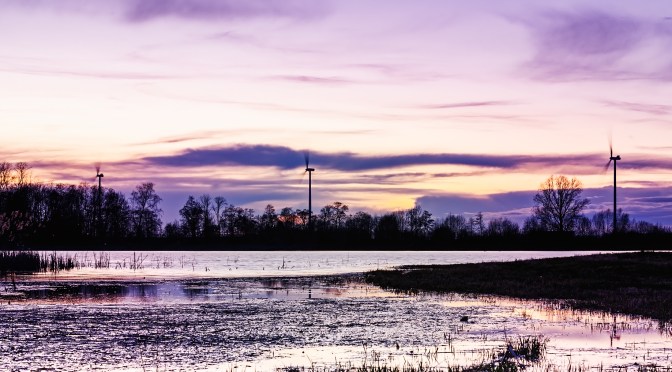
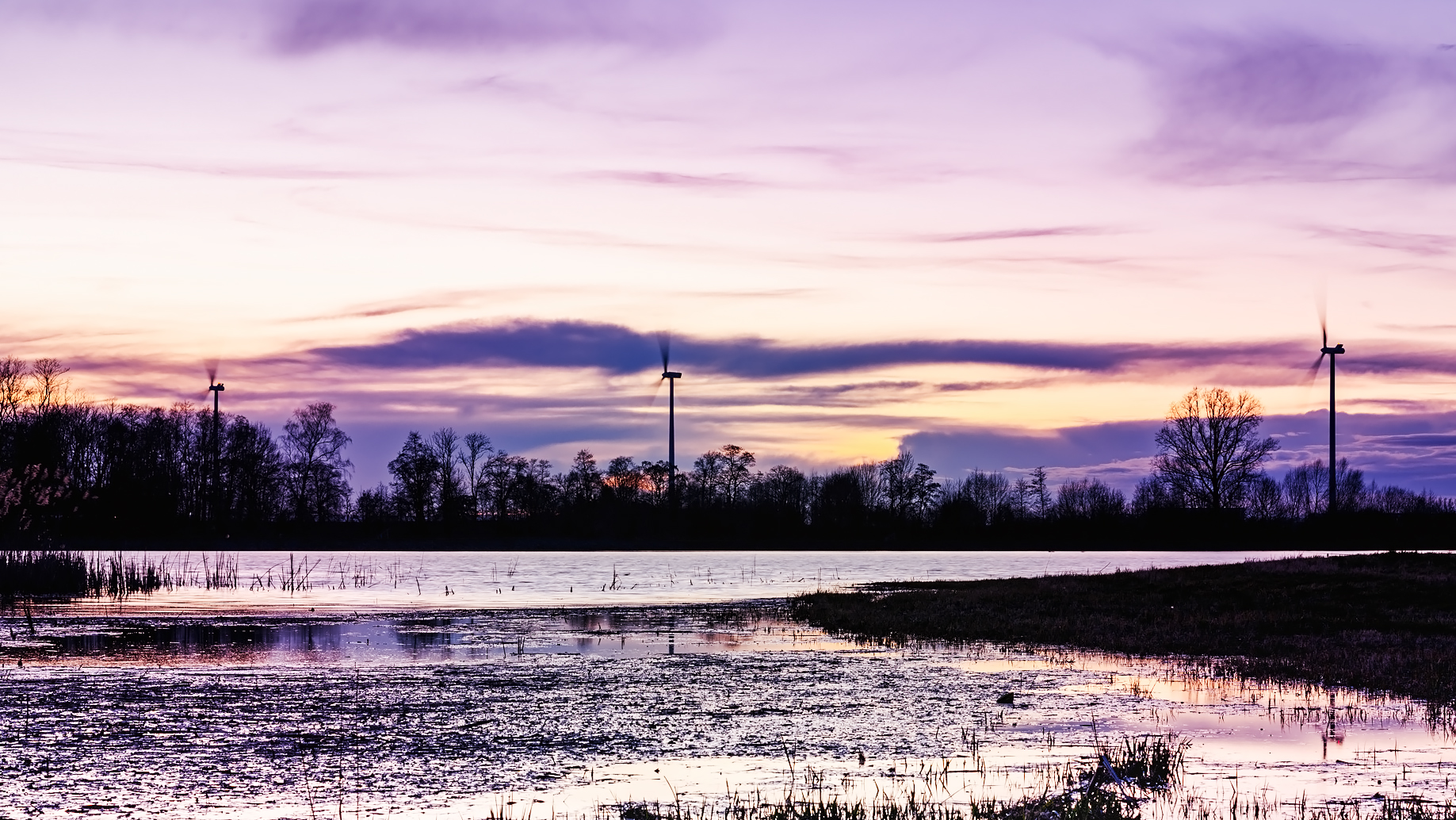
Blue hour at a flooded lake in early spring, where last year’s reeds and distant birds shape a quiet, in-between moment
You don’t notice the light first here — you notice the sound.
Wind moves through the trees behind you. Water shifts quietly at the edges of the flooded ground. Somewhere out there, across a surface that’s hard to read in the fading light, come the scattered calls of birds — ducks, coots, grebes, swans. Beneath it all, a low, steady murmur: frogs waking after winter.
This small lake, not far from home, is a place I return to often. It’s familiar, but never the same. Early spring changes it more than any other season. Meltwater flowing down from the mountains fills the surrounding fields. Sometimes even the dirt roads disappear. Paths I know well turn into shallow, reflective water. The landscape softens. Edges blur.
Last year’s reeds are still there — dry, pale, brittle. New shoots are already pushing through. That narrow band of vegetation is where most of the life hides now. Eurasian coots and great crested grebes keep low between the stems. Mallards move quietly along the edges. Mute swans stay farther out, where the water opens. You don’t always see them. But you hear them.
A few evenings ago, I stood here longer than I planned. At first, I was waiting for better light. Then I realized the light wasn’t the point anymore. A single ripple moved across the flooded grass. Something unseen. A bird shifting, maybe. Or just the water settling. It was enough to make me stop adjusting the camera and just listen.
By the time the sun is gone, the lake settles into blue hour. Colors fade into soft blues and violets. Reflections stretch and lose definition. Even the wind seems to slow. On the horizon, wind turbines turn steadily, almost unnoticed, marking time in a place that feels suspended between winter and spring.
There’s more happening here than it seems. Early amphibian activity is already underway — common frogs and toads returning to shallow water to breed. Insects will follow soon. Then more birds. The whole system is starting again, quietly, without spectacle.
If you have a place like this nearby, visit it now — before spring fully arrives. Slow down, stay a little longer than planned, and pay attention to what you can hear as much as what you can see. Every landscape has its quieter moments, and they’re often the ones we overlook. Sharing them — through photos, notes, or simple observation — is how we begin to understand them better.
Early spring doesn’t ask for attention. It rewards it. And maybe that’s the point — some changes are only visible when we’re willing to pause long enough to notice them.
If you enjoyed this moment, you can find more quiet landscapes and stories like this on Shutter & Saddle. Follow along, leave a comment with your own observations, or share a place you return to throughout the seasons — I’d love to hear how it changes for you.
Discover more from Shutter and Saddle
Subscribe to get the latest posts sent to your email.
 Shutter and Saddle