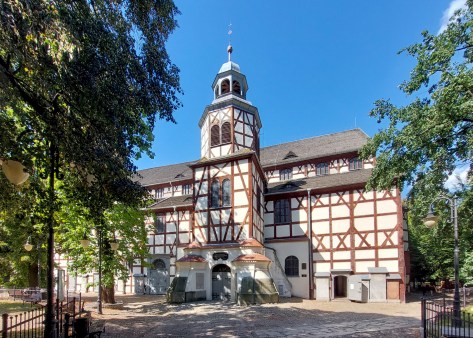
The half-timbered exterior of the Church of Peace in Jawor gives little hint of the Baroque splendor hidden inside
Cycling through Lower Silesia is like pedaling through the pages of a living history book. Around every bend, you’ll find a medieval castle, a cobblestone old town, or a sweeping mountain vista.
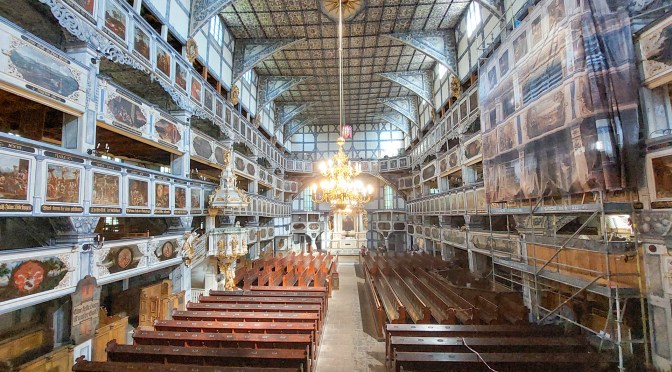
Yet few sights compare to the Church of Peace in Jawor. From the outside, it resembles a large, modest half-timbered barn. But step inside — and you’re greeted with a Baroque explosion of color, carvings, and paintings. The contrast is so striking it leaves even seasoned travelers speechless.
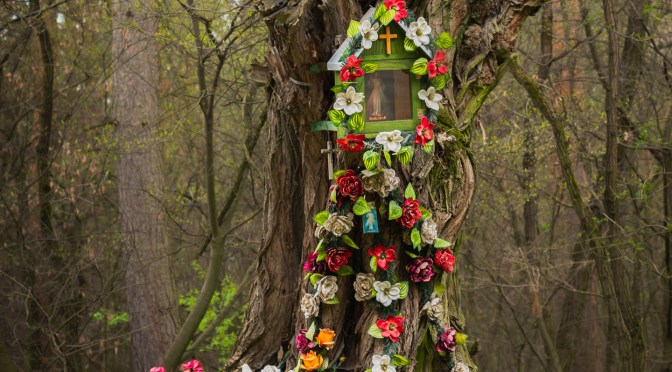
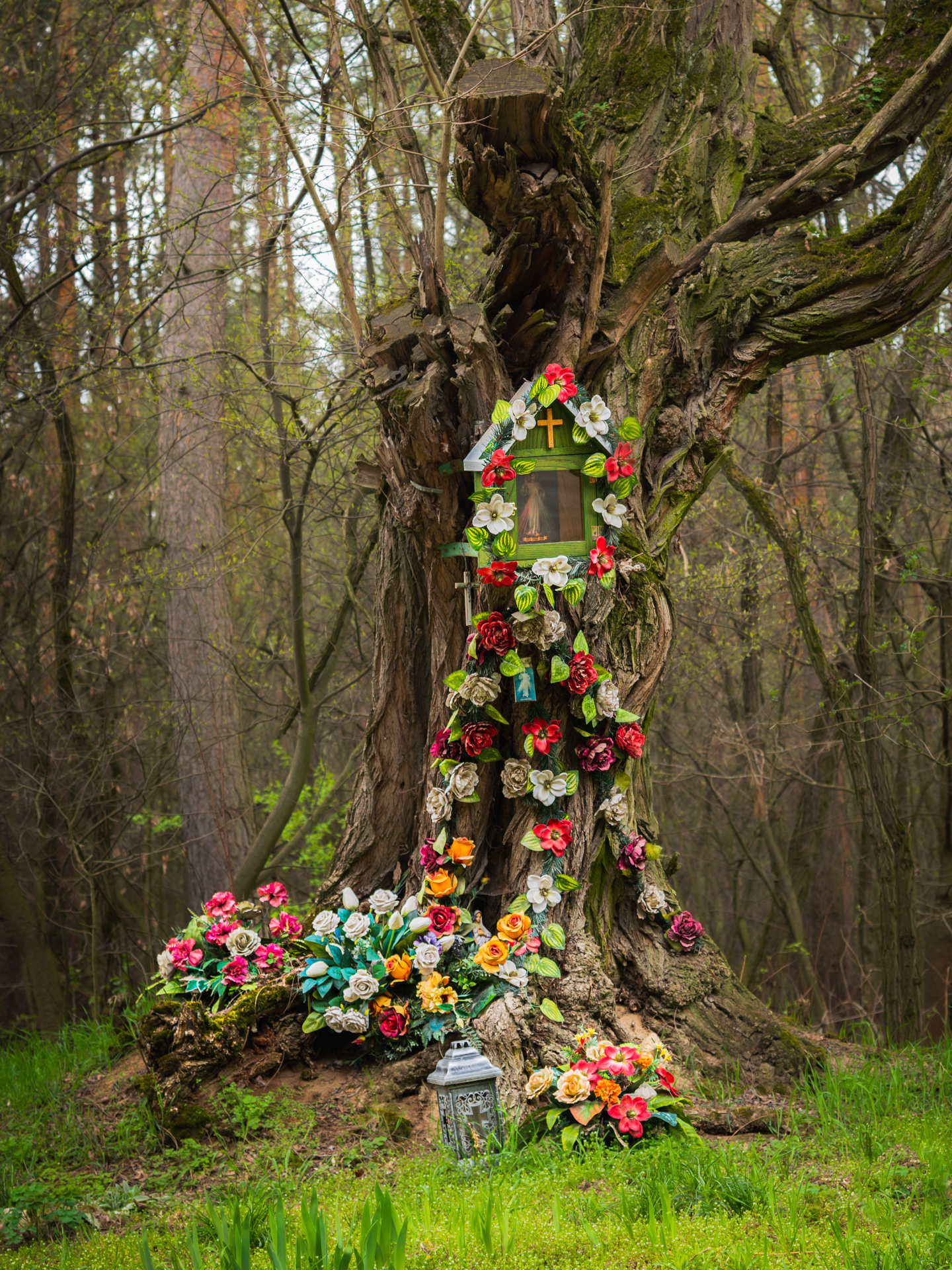
One of Poland’s countless roadside shrines — hidden in the woods, wrapped in flowers, and rooted in centuries-old tradition
Scattered across the Polish countryside — at crossroads, deep in forests, or standing quietly beside rural paths — you’ll find them: roadside shrines, known in Polish as kapliczki. These small sanctuaries take many shapes, from wooden boxes nailed to ancient trees to hand-built brick chapels and flower-draped niches carved into stone. What they share is more than appearance — they embody centuries of faith, memory, and connection to the land.
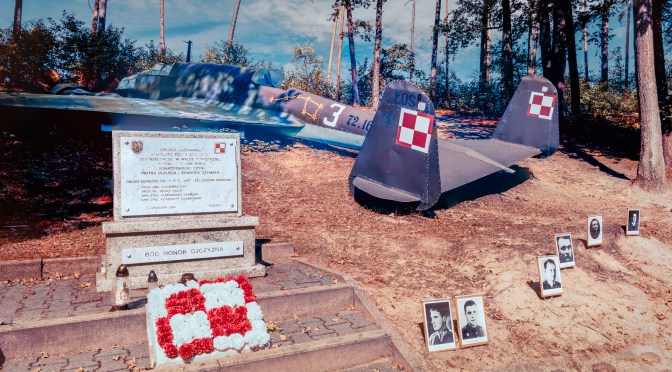
The full-scale PZL.37 Los replica standing in the exact spot where the aircraft crash-landed in 1939.
Deep in the Dlutowek Forest (Polish: Dłutówek) stands a remarkable full-scale replica of a WWII Polish bomber plane, the PZL.37 “Los” (Moose). This memorial honors the crew of the 212th Bomber Squadron, who crash-landed here in 1939 during the war.

 Shutter and Saddle