The European bison — or żubr, as it’s called in Polish — is the largest land mammal in Europe and one of the continent’s greatest wildlife conservation success stories. Once driven to near extinction by habitat loss and hunting, the species has made a remarkable comeback thanks to decades of dedicated reintroduction programs and habitat protection.
Poland is at the heart of this revival. Key bison populations now thrive in areas like the UNESCO-listed Białowieża Forest — the oldest primeval forest in Europe — and in Gołuchów, where this photo was taken. These wildlife reserves not only provide safe habitats for bison but also serve as important centers for ecological education, raising awareness about the importance of biodiversity and balanced ecosystems.
The Moment: Strength in Stillness
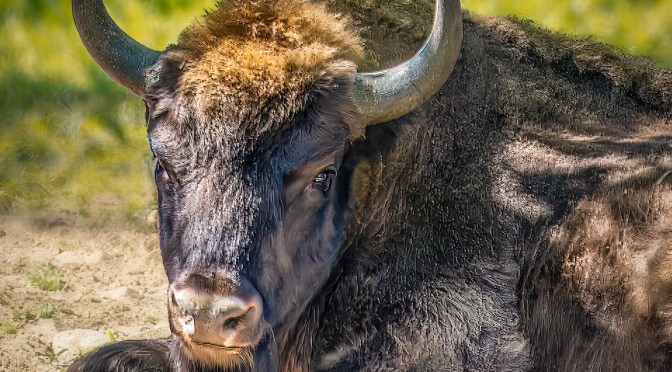
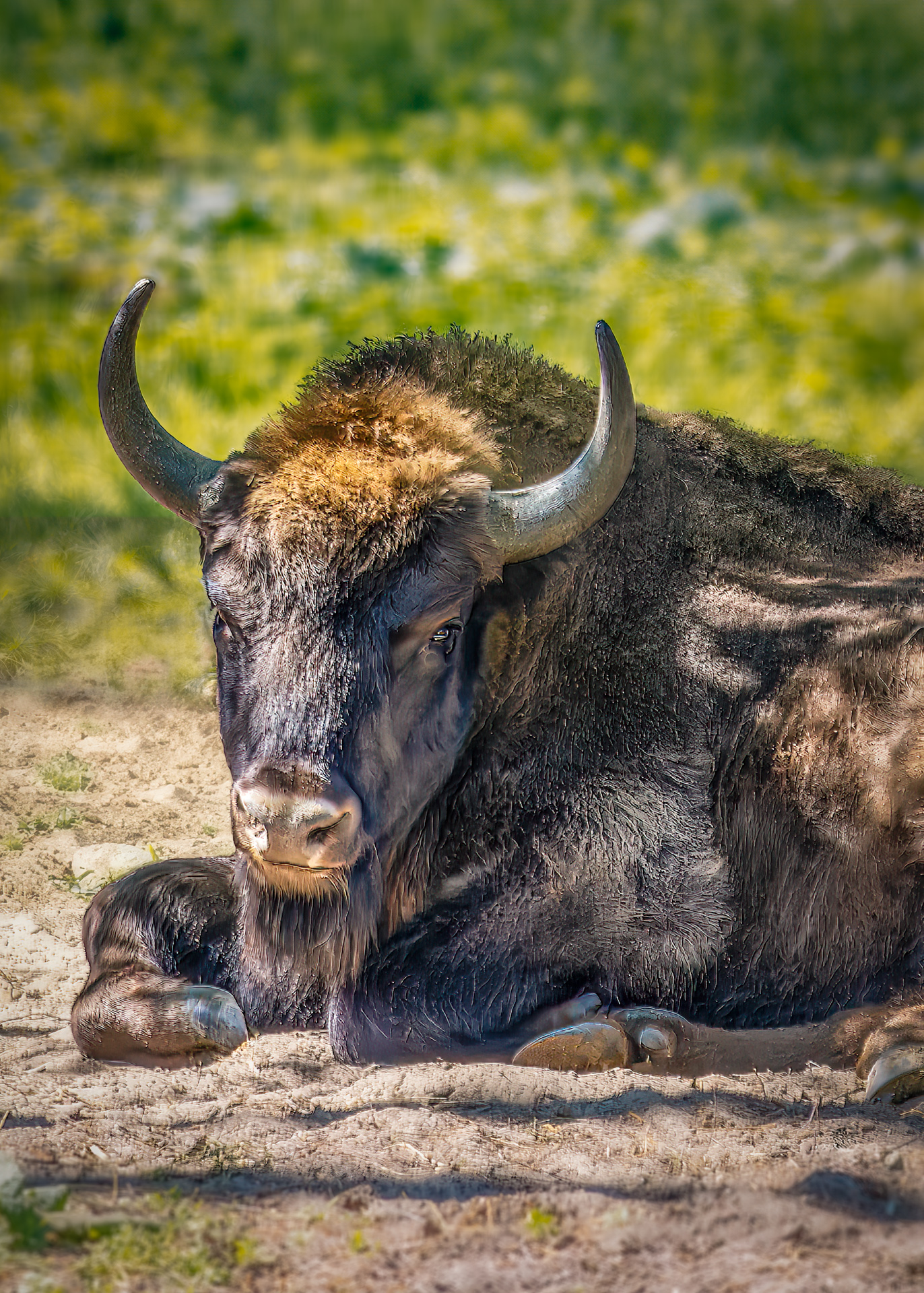
This particular European bison was captured during a peaceful moment, lying in the shade yet fully alert — an image that embodies the quiet power of the species. I composed the photo with the bison slightly off-center, leaving “breathing space” in front of its gaze to create a feeling of openness and anticipation.
The curve of its horns, the light catching its textured fur, and the gentle shadows across its massive body helped guide the viewer’s eye and shape the composition. I chose a low shooting angle to emphasize the animal’s size and natural majesty, while maintaining a respectful distance — something that’s always crucial in ethical wildlife photography.
Late-morning sunlight offered soft, directional lighting, perfect for capturing subtle details without harsh highlights. It allowed the bison’s fur to glow warmly while still retaining definition in the shadows — a key to keeping the subject looking lifelike and three-dimensional.
Post-Processing: Enhancing the Scene Without Overdoing It
The post-processing approach here was all about preserving authenticity while guiding the viewer’s attention.
In Adobe Camera Raw, I warmed the white balance slightly to reflect the natural tones of the light and boosted texture and clarity in the midtones — especially across the bison’s shoulders, forehead, and horns. I was careful not to overdo contrast, allowing for natural depth and retaining softness where needed.
To minimize distractions, I used a radial filter and subtle background blur in Photoshop, ensuring the focus remained entirely on the bison. The background was already pleasantly defocused in-camera, but softening it further created a stronger visual separation.
Selective dodging and burning helped sculpt the light on the face and chest, emphasizing volume without looking artificial. I then sharpened the eyes slightly to draw attention — a tried-and-true technique for bringing life to animal portraits.
A faint vignette was added at the end, just enough to guide the viewer inward without announcing itself.
Wildlife Photography Tips from the Field
- Light in the shade: Be patient. Dappled or diffused light can reveal subtle textures without washing out detail.
- Shoot low: Eye-level or lower compositions make animals appear more impressive and immersive.
- Focus on the eyes: A well-lit, sharp eye forms a powerful connection with the viewer.
- Composition matters: Leave space in the direction of the subject’s gaze to evoke curiosity and story.
- Use burst mode: Wildlife changes expression and posture in milliseconds — shoot in bursts to capture those fleeting moments.
Final Thoughts
The European bison may no longer dominate Europe’s ancient woodlands, but in sanctuaries like Gołuchów and Białowieża, it continues to inspire. Seeing one up close — and capturing a moment like this — is more than a photographic experience. It’s a reminder of what we’ve almost lost, and what careful, committed conservation efforts can achieve.
Have you ever seen a European bison up close?
If you’re planning a visit to Gołuchów or Białowieża, don’t forget your camera — and a bit of patience. These gentle giants may be shy, but when they appear, the moment is unforgettable.
📸 Share your own wildlife encounters or tips in the comments below — let’s inspire more mindful photography and conservation!
Discover more from Shutter and Saddle
Subscribe to get the latest posts sent to your email.
 Shutter and Saddle
What a beautiful creature. Lovely photo too.
LikeLiked by 1 person
Appreciate it! Wild beauty like this deserves to be shared. 😊
LikeLike
Nice piece, great photo, lovely subject.
LikeLiked by 1 person
Much appreciated! Right place, right time with an incredible animal. 😊
LikeLike
A great portrait of an amazing animal.
LikeLiked by 1 person
Thank you! It was incredible to witness this one up close.
LikeLiked by 1 person