On the windswept Baltic coast, where the Vistula River meets the sea, you’ll find Rezerwat Przyrody Mewia Łacha — one of Poland’s most unique and important birdwatching locations. This protected nature reserve near the river’s estuary is a key stopover site for thousands of migratory birds, including the Dunlin (Calidris alpina) — a small, fast-moving wader known for its distinctive plumage and constant motion.
Photographing a Dunlin in its natural habitat is both rewarding and demanding. These birds rarely pause, and catching them in good light requires more than a long telephoto lens — it takes patience, careful observation, and a keen eye for composition and behavior.
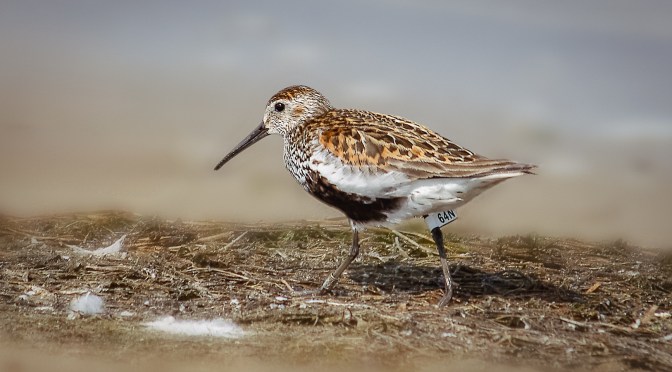
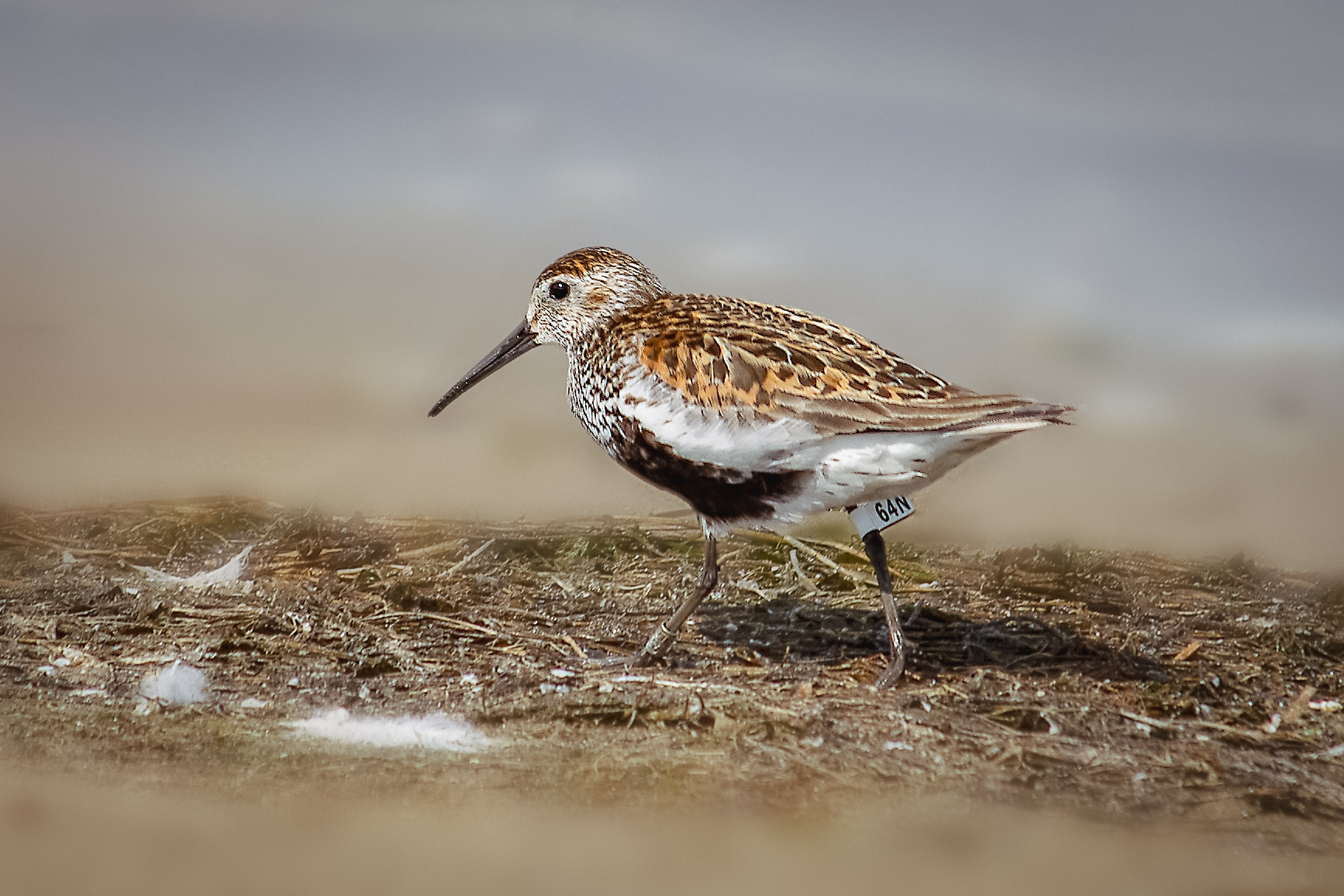
During a peaceful afternoon on the shoreline, I spotted this particular Dunlin tagged with a leg marker (64N) — likely part of an international bird monitoring initiative. It was a brief but meaningful encounter, captured in just the right light.
Composition & Technique
Photographing small, active shorebirds is all about reducing your profile. I got down low, lying on the sandy ground where the Dunlin foraged, blending into the environment. This angle helped create a more intimate composition while eliminating background clutter through a shallow depth of field.
The soft coastal light was ideal — diffused, natural, and perfect for bringing out the subtle colors in the bird’s plumage. I framed the shot with intention: placing the bird walking into the frame gave the photo a sense of direction and life. The raised leg and curved posture added motion and character to what could have been a static pose.
By allowing space in front of the bird — known as “look room” in composition — the image tells a quiet story of movement along the shoreline.
Post-Processing
In post, I focused on refining the light and enhancing texture while keeping the image grounded in realism. In Adobe Camera Raw, I lifted the shadows to reveal feather detail and adjusted the white balance slightly toward neutral warmth, echoing the soft overcast light of the coast.
Selective texture and clarity adjustments around the head and back brought out the feather patterns without introducing harshness. I used a radial mask in Photoshop to gently blur the foreground and edges — mimicking natural bokeh — and applied a slight vignette to guide the viewer’s eye.
Importantly, I kept the leg tag (64N) visible and sharp, as it’s part of the story: this is not just a wild bird, but one helping scientists track migration and behavior across Europe.
Wildlife Photography Tips: Small Birds
✅ Get Low – Eye-level or lower shots offer intimacy and help separate your subject from the background.
✅ Freeze the Action – Shoot at 1/1600s or faster to catch quick steps and wing flicks.
✅ Focus on the Eye – Use single-point AF and continuous tracking to keep eyes sharp — it’s the emotional anchor.
✅ Observe First – Spend time watching before shooting. Birds often return to familiar foraging spots.
✅ Stay Still, Blend In – Use natural cover or wear muted tones to minimize disturbance.
Final Thoughts
Birds like the Dunlin are more than beautiful subjects — they are vital pieces of Poland’s coastal ecosystems. At places like Mewia Łacha, every migration season brings new stories. The leg tag on this bird reminded me that behind every flight is a bigger picture — one of movement, survival, and scientific discovery.
Whether you’re just getting started with wildlife photography or you’re a seasoned nature enthusiast, photographing shorebirds is an invitation to slow down, look closely, and listen. The perfect moment often arrives not when you chase it — but when you’re still enough for it to come to you.
Ready to try shorebird photography yourself?
Grab your long lens, head to the coast, and see what stories you can capture at Poland’s bird sanctuaries — one click at a time.
Discover more from Shutter and Saddle
Subscribe to get the latest posts sent to your email.
 Shutter and Saddle
Beautiful composition in the photo, and I appreciated our explanations about the making of it. I also liked the bigger picture piece in your Final Thoughts.
LikeLiked by 1 person
Thank you so much – I’m really glad you enjoyed both the photo and the story behind it! That “bigger picture” is often what inspires me to take the shot in the first place, so it means a lot that it stood out to you.
LikeLiked by 1 person
My pleasure!
LikeLike